
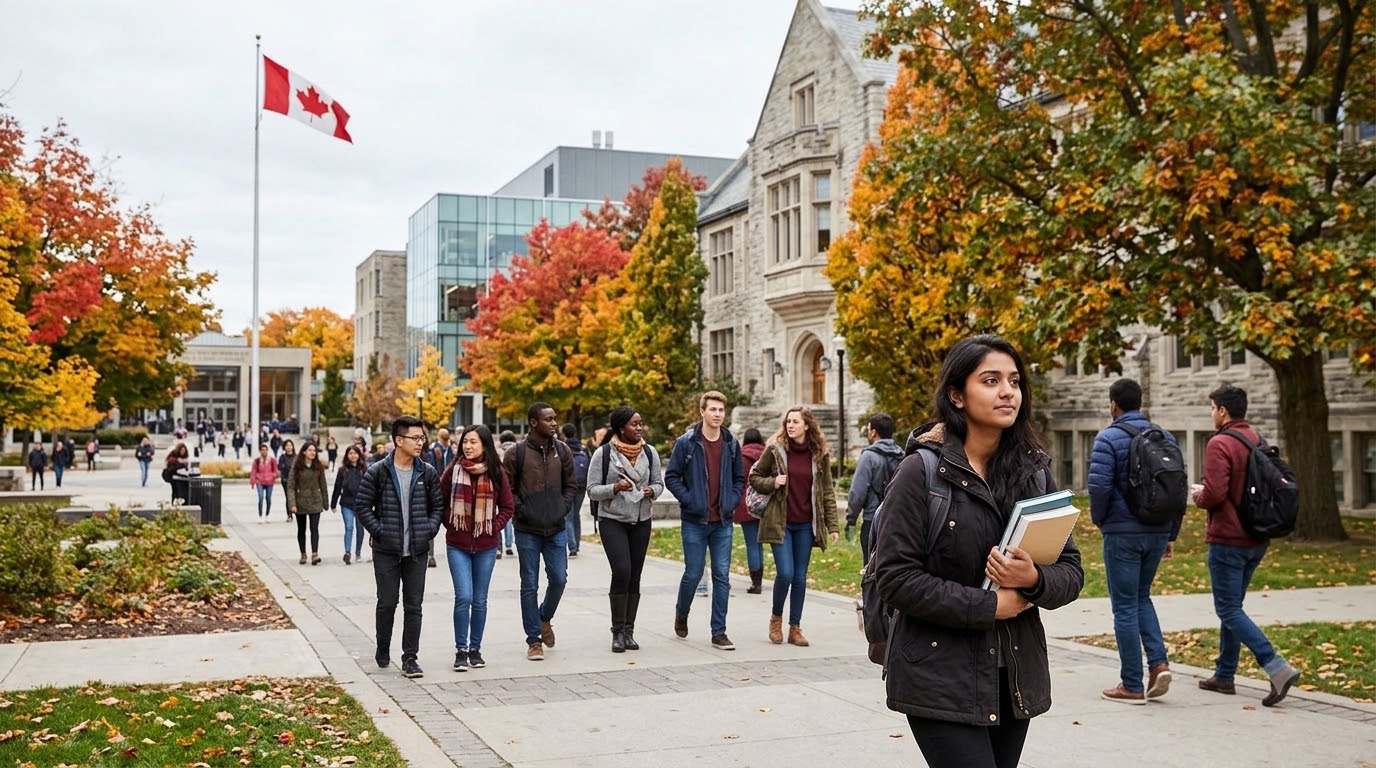
A study permit is necessary in most circumstances for pursuing education in Canada. However, there are certain exemptions under Canadian immigration rules. Exemptions may be applicable according to course duration, immigration status, and individual circumstances. Understanding Canada study permit requirements in 2026 and who is exempt from requiring a study permit can help those who are planning to study in Canada to make an informed choice about their education.
Students who are coming to Canada for short term programs that are for a period of six months or less can study in Canada without a study permit. Before relying on the exemption students must sure that the program meets the applicable requirements. They must also ensure that they have the necessary authorization to enter and remain in Canada. IRCC’s latest requirements must be checked if the student plans to continue studying beyond the period of the short-term program.
A study permit may not be required for certain family members or staff of foreign representatives accredited by Global Affairs Canada. To confirm whether you are exempt or not, your embassy can contact Global Affairs Canada. As Canada study permit eligibility depends on individual circumstances, it is important to verify your eligibility before enrolling in a program.
Members of foreign armed forces from countries designated under the Visiting Forces Act can study in Canada without study permit when they are in Canada on official duties. Eligible individuals should have a letter of acceptance from Canada's Department of National Defense.
This exemption is limited to qualifying military personnel and designated civilian personnel. Family members accompanying them may have separate study permit requirements.
People with Registered Indian status under Canada’s Indian Act do not need a study permit to study in the country even if they have the citizenship of another country. This exemption is applicable for those who meet the relevant status requirements.
Certain minor children may study in Canada without a study permit if they satisfy the conditions below.
A minor after reaching the age of majority, which is 18 or 19, depending on the province or territory, needs a study permit to continue studying. It must be noted that although certain minor children are exempt from the study permit, having a study permit offers additional benefits in some provinces. For example, a valid study permit may help eligible minors access certain social services, obtain a secondary school co-op work permit where applicable, and transition between education levels more conveniently in certain provinces.
Certain temporary residents and asylum seekers can take French language and cultural integration courses in Quebec without a study permit. These Canada study permit exemption rules apply to the qualifying courses identified by the Government of Quebec.
If you are considering French-language studies as part of your settlement or integration plans, verify that the course and your immigration status meet the applicable conditions. Not every French-language course or educational program automatically qualifies for this exemption.
Read to know more: Canada PGP Program vs Super Visa: Which Is Better?
Temporary residents studying for settlement and integration courses offered by a provincial or territorial government may not need a study permit. The courses are to support eligible newcomers to integrate into Canadian society and understand their new communities. Those who are enrolling must confirm whether their program falls under the category where a study permit is not required.
A temporary measure that runs until 26 February 2027 allows certain construction apprentices to study without a study permit if they satisfy specific Canada study permit eligibility requirements.
Applicants must meet all the following conditions when requesting the exemption and when a decision is made:
Read to know more: Canada PR Application Refused: What Can You Do Next?
Some foreign workers may be eligible to study in Canada without a study permit while continuing to work under a temporary public policy (until Dec 31, 2027)
Under the applicable IRCC guidance, workers must: -
Eligible workers who want to improve their skills or undertake training study short-term courses in Canada without a study permit for up to six months or until their work permit expires (whichever comes first). Workers planning to pursue longer educational programs must review their options before enrolling.
Studying in Canada without a study permit may be an option for certain individuals. To know who can study in Canada without a study permit, factors such as course duration, immigration status, and specific IRCC requirements have to be taken into consideration. Before enrolling in a program it is essential to take the time to confirm whether an exemption applies to your situation. As individual circumstance can differ understanding the current immigration rules can help the students to choose the right path towards their educational goals.
Immilaw Global, Canada student visa consultants in Kerala can help you assess your study options, understand study permit exemptions, and identify the requirements relevant to your circumstances.
Whether you are planning a short-term course or considering a longer academic programme we can guide you regarding Canada study permit requirements in 2026.
Yes, in certain circumstances. For example, eligible students enrolled in a program lasting six months or less may not need a study permit. Other exemptions apply to specific categories of individuals.
Generally, a foreign national may study in a program lasting six months or less without a study permit, subject to the applicable conditions. You should verify your circumstances before travelling or enrolling.
You cannot rely on the work authorization normally available to eligible study permit holders if you do not have a study permit. You must have separate, valid authorization to work, such as an appropriate work permit.
Some minor children can attend preschool, primary school, or secondary school without a study permit, depending on their circumstances and their parents' status. Other children may need a study permit.
Certain workers with valid work permits can study in program lasting six months or less, subject to the applicable IRCC requirements. The exemption does not automatically apply to every worker or course.
It depends on your educational plans, work intentions, and personal circumstances. A study permit may provide advantages for eligible students, including certain work opportunities and greater flexibility when continuing their education.
















65be04cbad701.webp)














 CANADA
 +1 (647) 767-0672
 INDIA