
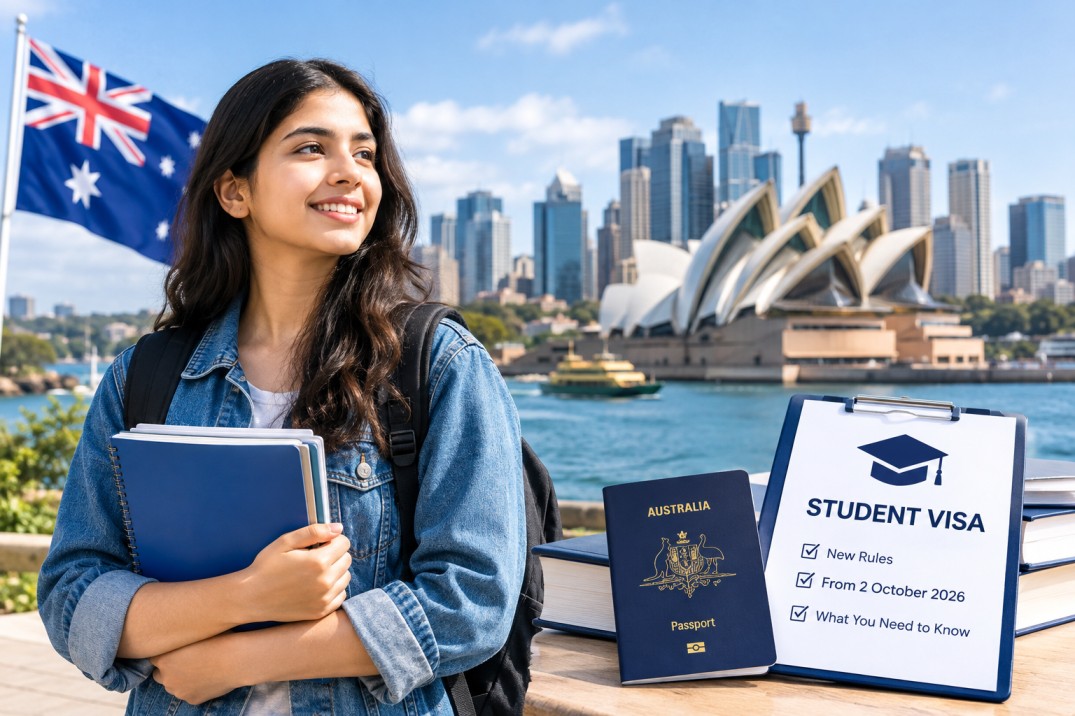
Effective from 2nd October 2026, Australia has introduced major student visa changes. The new changes will now impact how students apply, whether family members can accompany them and also how they can change courses or institutions. Students and families must plan carefully before enrolling, travelling, or applying for a visa. The reforms are to strengthen the integrity of the international education system. It will ensure that the student visas are granted for genuine study.
One of the biggest changes is that many temporary visa holders can no longer simply apply for a student visa while they are already in Australia.
Since 1 July 2024, holders of visitor visas (subclass 600) and temporary graduate visas (subclass 485) have been barred from applying for a student visa while in Australia. From 2 October 2026, the restrictions have been extended to holders of a range of additional temporary visa subclasses, including certain temporary work, training, working holiday and other temporary activity visas. They have to leave Australia and lodge their student visa application from overseas. They must also be outside Australia when the student visa is granted.
This is particularly important for people who previously entered Australia on another temporary visa and planned to switch to a student visa while remaining in the country.
Australia student visa offshore application: If an applicant is required to apply offshore but submits an application in Australia instead, the application is invalid. Home Affairs warns that this will create further visa problems, particularly if the applicant's existing visa expires.
Students therefore should check their current visa status and also their eligibility before enrolling in a course or making significant financial commitments.
The changes also affect people who already hold a Student Visa and want to apply for another Student Visa in Australia.
A further onshore Student Visa application is now permitted only in specific circumstances. Australia student visa exemptions for PhD applicants may apply, alongside exemptions for students who need additional time to complete their current course, certain students progressing to higher-level studies, school students, those affected by provider default, and eligible government-sponsored students.
This means students can no longer assume that completing one course and immediately enrolling in another will automatically allow them to remain in Australia and apply for a new Student Visa.
In instances where students are changing courses they should consider the Australian Qualifications Framework (AQF) level of their current and proposed courses and whether their circumstances meet an exemption.
Under the new rules, most student visa applicants cannot automatically include their partner or dependent children unless a specific exemption applies. Importantly, the Australian government has also removed the previous subsequent entrant pathway for student visa holders. In other words, a student generally cannot obtain their student visa first and then later bring eligible family members to Australia through a subsequent entrant student visa application.
Eligible family members generally include a spouse or de facto partner and dependent children who meet the relevant requirements.
Students who plan to bring their families to Australia must determine their eligibility before lodging the student visa application without the assumption that their spouse or children can join them later.
Family members generally must be in the same location as the student when the application is lodged. Onshore applicants can include only family already in Australia. Also, a family member on a student visa who wants their own student visa must apply offshore, and there is no exemption.
Under the new rules, eligible family members can be included when an exemption applies and the requirements are satisfied. Once the visa is granted, student visa holders can no longer add family members as subsequent entrants.
The new family restrictions are not absolute. Limited exemptions apply to certain students, such as PhD students, certain foreign government scholarship recipients, DFAT- and Defense-sponsored students, and also eligible nationals from Pacific and ASEAN countries.
Australia student visa for Indians 2026: The eligibility for Indian students will depend on their visa requirements, financial capacity, course, sponsorship, and individual circumstances. As Indian applicants does not qualify for the nationality based exemptions available to eligible nationals of certain ASEAN and Pacific countries, students should also check whether their current visa permits them to apply for a student visa from within Australia or must apply offshore.
From 2 October 2026, most non-school students must stay in their principal course and institution for 12 months before changing course or providers, unless an exception applies. The 12 month transfer rule is temporary. It applies from 2 October 2026 to 30 June 2027 (up from 6 months). After that, the new transfer stream takes over. From 1 July 2027, a new student visa transfer stream will further control course changes, generally allowing transfers only to the same or higher AQF level. Students will also no longer be able to switch from higher education to a VET course after arriving in Australia.
Student Visa applications lodged before 2 October 2026 continue to be assessed under the rules that applied when they were lodged. This includes applications that already included eligible family members.
Therefore, the date an application was lodged is highly significant.
How Students Can Prepare
Students planning to study in Australia must check
Home Affairs specifically advises applicants to understand the new rules before making visa, study, travel or relocation plans.
The new changes bring a major shift in Australia's international student visa framework. The changes do not mean that Australia is closing its doors to genuine international students. Genuine students can still pursue their goals of study. The base Australian Student visa application fee is AUD 2,500 from 1 July 2026, although English Language Intensive Courses for Overseas Students (ELICOS) applicants pay a reduced fee of approximately AUD 2,050; additional charges apply for accompanying family members. Prospective students should factor these costs into their financial planning. The key to meeting study goals is to understand the rules before making decisions about your course, visa, travel, or family.
At ImmiLaw Global, the best study abroad consultants in Kerala for Australia can help students stay ahead of these changes. We will help you with personalized visa advice, course support, pathway guidance, family visa support, etc. We will provide you with all the assistance throughout the application process.
It depends on your current visa. Some temporary visa holders must leave Australia and apply for a Student Visa from overseas.
No. Visitor visa holders have been barred from applying for a Student visa while in Australia since 1 July 2024. From 2 October 2026, the restrictions were expanded to cover additional temporary visa subclasses, including Working Holiday (417), Work and Holiday (462), Training (407) and certain temporary work visa holders. Eligibility depends on your current visa subclass and any applicable exemptions.
Some students can include eligible family members, but new rules limit this option. Certain exemptions apply to specific student categories and nationalities.
The AQF level indicates the level of an Australian qualification. It is important when assessing course progression and eligibility under the new visa rules.
Generally, no. Most non-school students need to complete 12 months of their principal course usually with the same provider before transferring, unless an exception applies.
Some PhD students are treated differently under the new rules. Certain exemptions may allow them to apply onshore or include eligible family members.

















65be04cbad701.webp)














 CANADA
  +1 (647) 767-0672
 INDIA
INDIA