
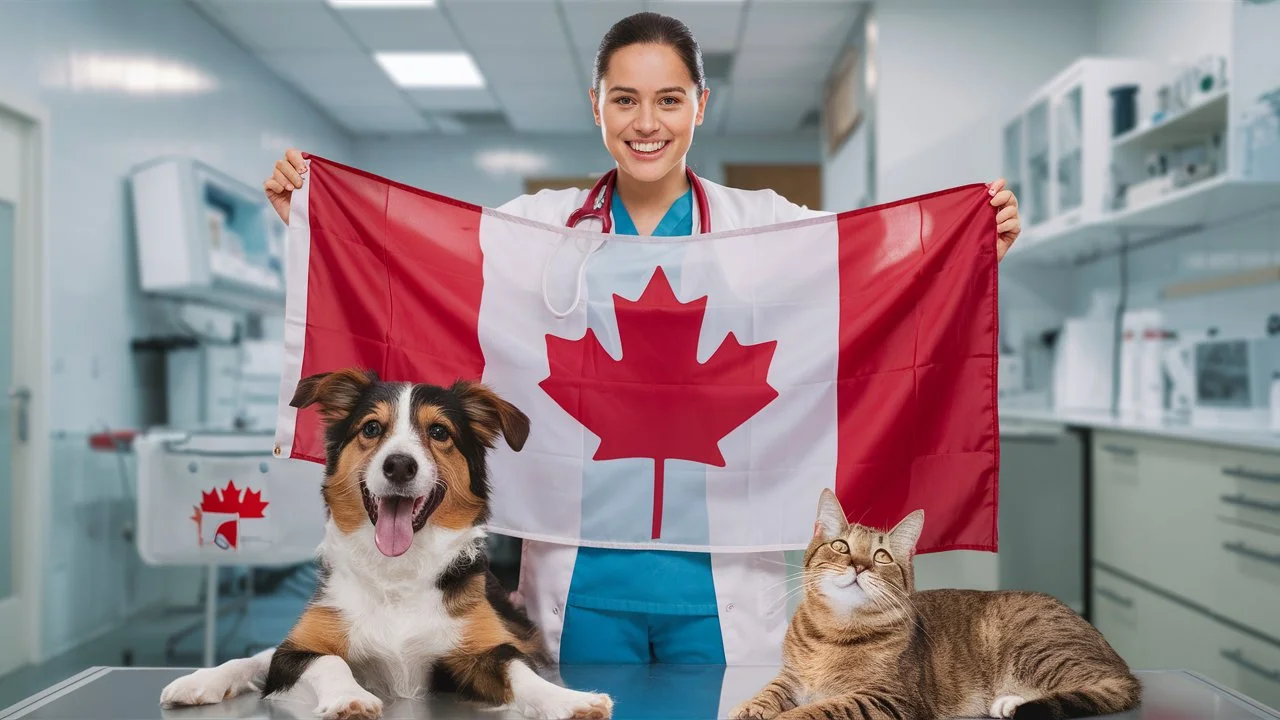
Veterinarians are in strong demand across Canada. As per the Canadian Veterinary Medical Association, recruiting and retaining professionals in the field have become difficult in 2026. Hence there are increasing employment opportunities across several provinces for veterinarians.
International skilled workers who want to practice veterinarians in Canada must obtain Veterinary Licensing in Canada. The licensing process usually includes the following:
The certification process for veterinarians in Canada is overseen by the National Examining Board (NEB) of the Canadian Veterinary Medical Association (CVMA). As per the educational background, internationally trained veterinarians are mostly needed to complete the exams like:
Once the veterinarian gets the NEB certification, they have to get the provincial licenses before they can start practicing.
Internationally qualified veterinarians in Canada can work in:
The salary for veterinarian jobs in Canada for foreigners can depend on the province, experience, and specialization. Experienced veterinarians can earn higher salaries. Employers often give other benefits to skilled workers, which includes bonuses, support for relocation, and work arrangements that are flexible.
Veterinarians can improve their immigration prospects for Canada by strengthening their immigration profile.
Express Entry, the popular and fastest immigration pathway for skilled workers, including veterinarians, in Canada, was launched in 2015. This online immigration application system simplifies the process of selecting qualified workers for permanent residency under several economic immigration programs.
For veterinarians, the most relevant economic immigration program under the system is the Federal Skilled Worker Program (FSWP). The FSWP evaluates the candidates based on factors such as:
This program prioritizes candidates with high-demand skills. Therefore, eligible candidates often have strong prospects for immigration. Also, the Comprehensive Ranking System (CRS) is used in Canada to rank applicants. Candidates with higher scores receive Invitations to Apply (ITA) for permanent residency. Veterinarians can therefore also improve their CRS score by obtaining a valid Canadian job offer or by securing a provincial nomination.
The skilled workers and international graduates can apply through the targeted streams of Provincial Nominee Programs. Some provinces in Canada actively recruit veterinary professionals through the Provincial Nominee Programs.
Ontario Immigrant Nominee Program (OINP) – Ontario has strong employment prospects for veterinarians. The OINP of Ontario has streams for immigration for foreign workers and international graduates with valid job offers. Certain Ontario immigration streams may allow employers to hire foreign workers without the need of an LMIA.
Prince Edward Island Provincial Nominee Program (PEI PNP) – With a small veterinary workforce, Prince Edward Island offers excellent opportunities for professionals seeking a smaller community and long-term settlement options. Veterinarians can apply through the Skilled Worker Stream and International Graduate Stream.
Other provinces with high demand for veterinarians include
In 2026, immigrate to Canada as a Veterinarian is an excellent opportunity for future career growth. The strong demand across Canada gives the candidates multiple immigration pathways for permanent residency and to build a successful career in the country. The process can be complex, and candidates need to know eligibility requirements, licensing procedures, and documentation processes. Immigrating to Canada can be made achievable with the support of well-established immigration consultants.
ImmiLaw Global, professional immigration consultants will assist with credential assessments, language proficiency tests, licensing examinations, and immigration documentation. By analyzing your profile, we will suggest the best pathway which leads to your success.
The most relevant and common pathway for internationally qualified veterinarians is the Express Entry system, especially the Federal Skilled Worker Program, along with PNP streams.
It is not mandatory to have a job offer to immigrate to Canada as a Veterinarian. However, it can increase the CRS score and thereby improve the chance of receiving an ITA.
The provinces of Ontario, Alberta, and British Columbia and rural regions often have high demand for veterinarians.
Certification and a provincial license are mandatory before practicing as a veterinarian in Canada.
The common exams are BCSE, NAVLE, and clinical proficiency assessments, which the foreign veterinarians need to pass according to their qualifications to practice in Canada.
As a successful applicant, you can include your spouse and dependent children in your application.
The candidate must have a recognized veterinary degree. The veterinarian must complete the licensing exams and also registration with a provincial regulatory body.
To immigrate to Canada, the first step is to assess your eligibility for Express Entry or a Provincial Nominee Program and then begin the process of credential evaluation.

















65be04cbad701.webp)














 CANADA
  +1 (647) 767-0672
 INDIA
INDIA