
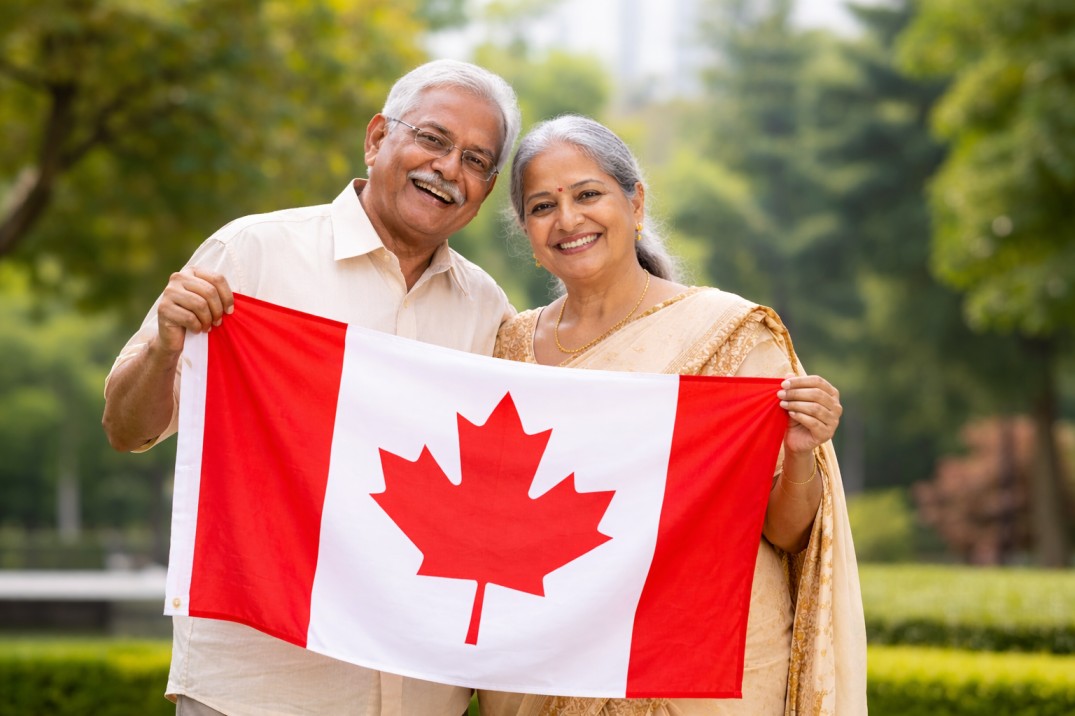
The Super Visa is a visitor visa that lets parents and grandparents of Canadian citizens and permanent residents stay in Canada for extended stays. The parents and grandparents can stay for up to five years per visit, with multiple entries over a 10-year period. It is the quick alternative for family reunification when compared to waiting for permanent residency through the Parents and Grandparents Program (PGP).
There have been Super Visa Canada new rules that have come into effect from March 31, 2026. The revisions to the Super Visa by Immigration, Refugees and Citizenship Canada (IRCC) will help families in Canada to bring their parents and grandparents to the country more easily. The income requirement calculation has been changed, and the new system has opened the door for many Canadian citizens and permanent residents who were previously unable to qualify.
The Super Visa Canada new rules are beneficial, particularly for young professionals with variable incomes, new permanent residents establishing their careers, and families whose parents are financially independent. It also benefits applicants who were previously denied the visa due to income gaps. Further, the applications that are still in progress or have already been submitted after March 31, 2026, will be assessed under the new, more flexible criteria.
1. Two-Year Income Assessment
While only the most recent tax year was considered for the Super Visa by IRCC for the income assessment, now a two-year income assessment period has been introduced. The applicants meeting the income criteria in either of the previous two taxation years can qualify for the visa. This gives the families with fluctuating earnings, recent job changes, or temporary leaves a better chance to qualify.
2. Combine Income with Parents or Grandparents
Sponsors can now combine the income (which includes pensions, investments, or retirement income) of visiting parents or grandparents to meet the Canada Super Visa eligibility of the income threshold. This is advantageous for families who are below the income threshold, have retired parents with steady income, or are single sponsors without a co-signer.
For the Super Visa income requirement in Canada, the applicant still has to meet the minimum income threshold (LICO + 30%), which varies based on household size. For instance, a family of 2 needs about $38,002, while a family of four requires $56,724, and six members about $72,560.
Correctly calculating the family size is important. When determining the family size, you can include the host and their spouse, dependent children, invited parents/grandparents, and anyone previously sponsored.
The processing time and costs for the Canada Super Visa 2026 are as follows:
Super Visa application processing times can vary depending on the country. It can take more than 6 months for applicants from India.
Cost:
The Super Visa is a temporary visa that makes it possible for parents and grandparents to stay in Canada for up to five years per visit. It has a faster processing time. The applications for a Super Visa can be submitted anytime.
PGP Sponsorship grants permanent residency but it is an invitation-based application process. It has a longer processing time.
The Super Visa can be a temporary solution to reunite with family while waiting for PGP invitations.
The Canada Super Visa changes on March 31 2026 have made the program more flexible and accessible. The changes and updates of the immigration programs must be known properly to make informed decisions and apply with proper documentation. Here’s where ImmiLaw Global will guide you, complying with the latest laws and increasing the chance of success.
Read to know: Canada PR Without Job Offer: 13 PNP Pathways Available in 2026
The Super Visa is a visitor visa that allows extended stays for the parents and grandparents of Canadian citizens or permanent residents.
Under the Super Visa, a parent or grandparent can stay up to 5 years per visit and enter the country multiple times over a 10-year period.
The revised changes to the Canada Super Visa came into effect on March 31, 2026.
The income assessment has become more flexible with the introduction of a two-year income assessment period and also the possibility of combining the income of the visiting parent or grandparent.
No, the Super Visa does not grant permanent residency.
Yes, the Super Visa can be applied for by the sponsors at any time.
Processing time varies by country; the processing time is faster than PGP, and it takes several months for processing.
No, the Super Visa grants a temporary visit only, whereas the PGP leads to permanent residence.













65be04cbad701.webp)














 CANADA
  +1 (647) 767-0672
 INDIA
INDIA