
695b52ce6f43a.jpeg)
_1767593001.jpeg)
Australia is a popular destination among Indians who are excited to study, work, settle permanently, or visit overseas countries. The visa and its eligibility differ according to the purpose. Below is a guide that offers a breakdown of the Australian visa types, helping you decide which visa is right for you.
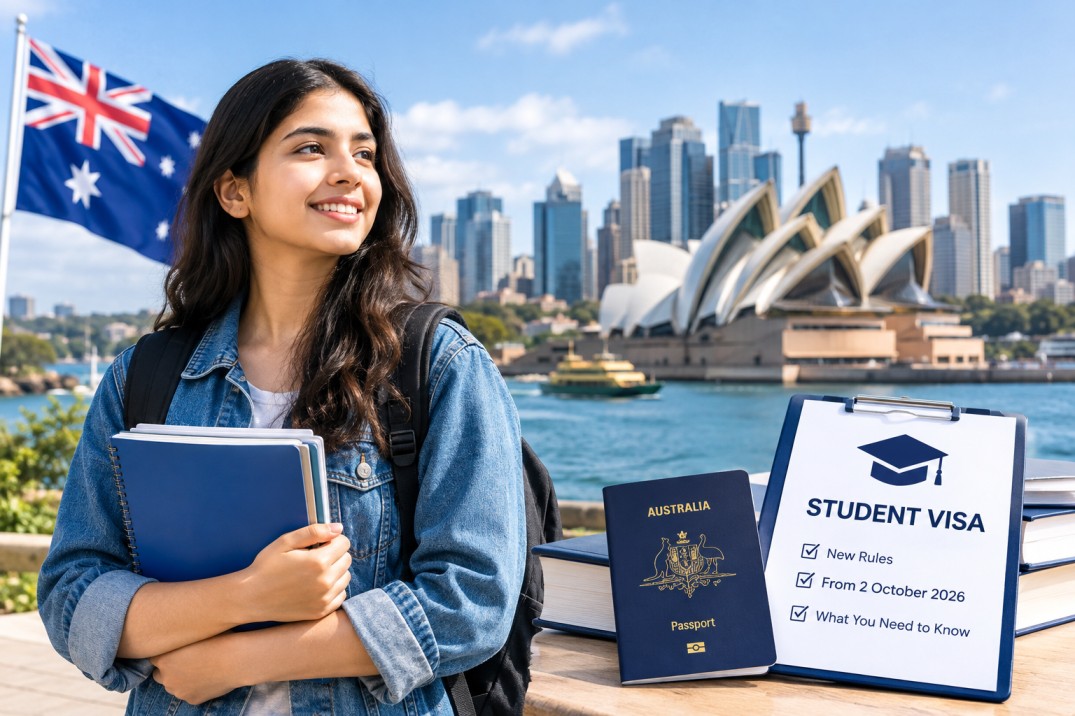
A student visa (subclass 500) is required for international students seeking full-time student status in an Australian institution. During the study period, students on this visa can work up to 48 hours every two weeks. Some of the important eligibility requirements include confirmation of enrollment (CoE), the genuine student (GS) requirement, proof of funds, English language proficiency, etc.
Once the student has completed the studies, they can apply for the Temporary Graduate Visa (Subclass 485) for post-study work opportunities. The streams under this visa include:
The Visitor Visa (subclass 600) allows you to visit Australia for a small temporary period. You must show that your visit is temporary and that you have enough money to get this visa. The visitor visa encompasses various streams.
Partner Visa (Onshore)—Subclass 820/801
The spouse or de facto partner of an Australian citizen or permanent resident can live, work, and study in Australia with a Partner Visa (Onshore)—Subclass 820, which is a temporary visa while awaiting permanent residency (Subclass 801). The applicant must be in Australia and have a real, ongoing relationship with the partner.
Offshore Partner Visa – Subclass 309/100
The spouse or de facto partner of an Australian citizen or permanent resident who is outside Australia at the time of application can live, work, and study in Australia on an Offshore Partner Visa—Subclass 309 Temporary Visa while awaiting permanent residency (Subclass 100).
Prospective Marriage Visa – Subclass 300
The fiancé of an Australian citizen or permanent resident can live, work, and study in Australia on a temporary Prospective Marriage Visa—Subclass 300. The visa is valid for 9–15 months, and after marriage, the applicant can apply for Subclass 820/801.
There are different parent visas, which allow parents of Australian citizens or permanent residents (PR) to live in Australia. They are:
The child of an Australian citizen or permanent resident can live in Australia by applying for:
Dive in: Engineering in Australia—Your Way to Unlock Global Opportunities
Skilled Independent Visa (Subclass 189)
You can apply for this permanent residency (PR) visa if you are a highly skilled professional with high language proficiency and have a strong academic and work experience background. This visa allows you to live and work anywhere in Australia without sponsorship. SkillSelect will invite you to apply for this points-tested permanent visa based on your ranking.
Skilled Nominated Visa (Subclass 190)
The Skilled Nominated Visa (Subclass 190) is a permanent residency (PR) visa. If you are looking to live in a particular state or territory in Australia, then the Skilled Nominated Visa (Subclass 190) is ideal. To apply for this visa, you must be a skilled worker and require a nomination from a state or territory government. Furthermore, you should have an occupation listed in the State Occupation List, and you are also expected to live and work in the nominating state for a certain duration.
Skilled Work Regional (Provisional) Visa (Subclass 491)
Subclass 491 (Skilled Work Regional) is a provincial visa valid for 5 years, leading to permanent residency after 3 years. If you are a skilled worker willing to live and work in regional Australia, then this visa is ideal. This visa is also best for those who are flexible with the location, have low points, and are seeking easy PR pathways. To apply for this visa, you require a state or family sponsorship and must have an occupation on a relevant regional skilled occupation list. After holding the Subclass 491 visa and meeting the requirements (living in regional Australia for at least 3 years, earning a minimum taxable income for 3 years, and maintaining lawful status), you can get permanent residency through Subclass 191.
Employer Nomination Scheme (ENS) Visa (Subclass 186)
The Employer Nomination Scheme Visa (Subclass 186) is a direct permanent residency visa for skilled workers nominated by an Australian employer. The streams under this visa are the Direct Entry stream, the Temporary Residence Transition stream, and the Labour Agreement stream. On this visa application, you can also include eligible family members.
The Temporary Skill Shortage (TSS) Visa is also known as Subclass 482.
This visa allows you to work and live in Australia for 2 to 4 years, depending on occupation and stream, and the applicants can transition to PR through the Employer Nomination Scheme (Subclass 186). For this temporary employer-sponsored visa, you require a valid job offer from an Australian employer and experience in a listed occupation.
Skilled Employer Sponsored Regional (Provisional) Visa Subclass 494
If you plan to work in regional Australia, you can apply for this visa, which offers a direct pathway to PR. Most importantly, your application requires sponsorship from a regional employer and a minimum of 3 years' experience in the nominated occupation.
Global Talent Visa (GTI Visa)
If you are a highly talented professional, then the GTI visa is ideal for you. This fast-track PR visa only requires a nomination by an Australian citizen or an organization and does not require employer sponsorship. ImmiLaw can help you apply for the most suitable Australian visa and support you throughout the entire application process. Our lawyers provide personalized consultation and ensure the success of your visa application.
Contact us for a personalized consultation and end-to-end support with your Australian visa application.
Keep reading : Top Scholarships in 2026 for International Students

















65be04cbad701.webp)
















 CANADA
  +1 (647) 767-0672
 INDIA
INDIA